
The Process!
EVERY SINGLE CASTING that Wear-Tek produces starts with a well-designed and constructed pattern. We use computer programs such as SolidWorks to create a working 3D model that includes all the needed tolerances and shrink calculations. This process also includes the addition of draft, risers, core prints, gating, and sprue location. These models are then used with our Flow 3D solidification software so that the pattern is laid out as efficient as possible as well as catch any potential casting defects before going to full production.
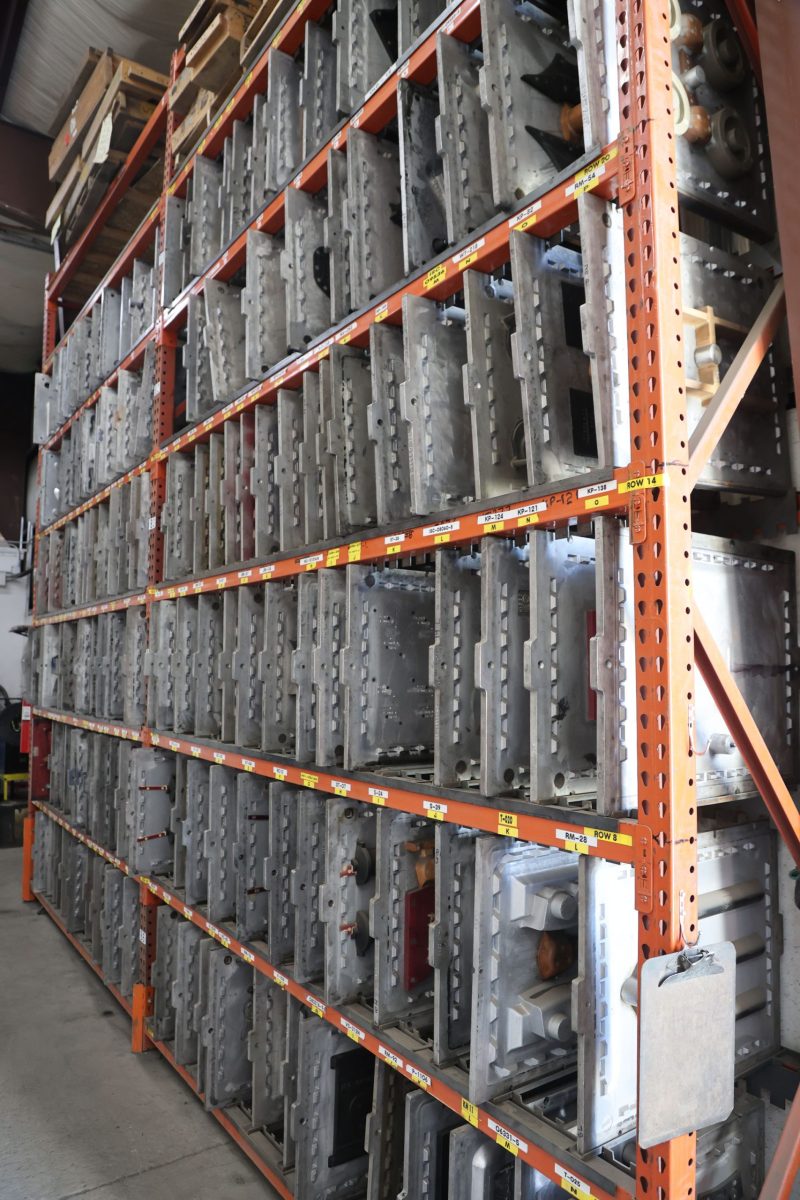
Only after the preliminary work is complete and reviewed will the pattern components be cut using various types of hardwood or specialty plastics on our CNC router and mill. We know these patterns need to last so only the best available pattern materials are used. Wear-Tek stores and maintains some 3000 customer owned patterns.
No-Bake Molding
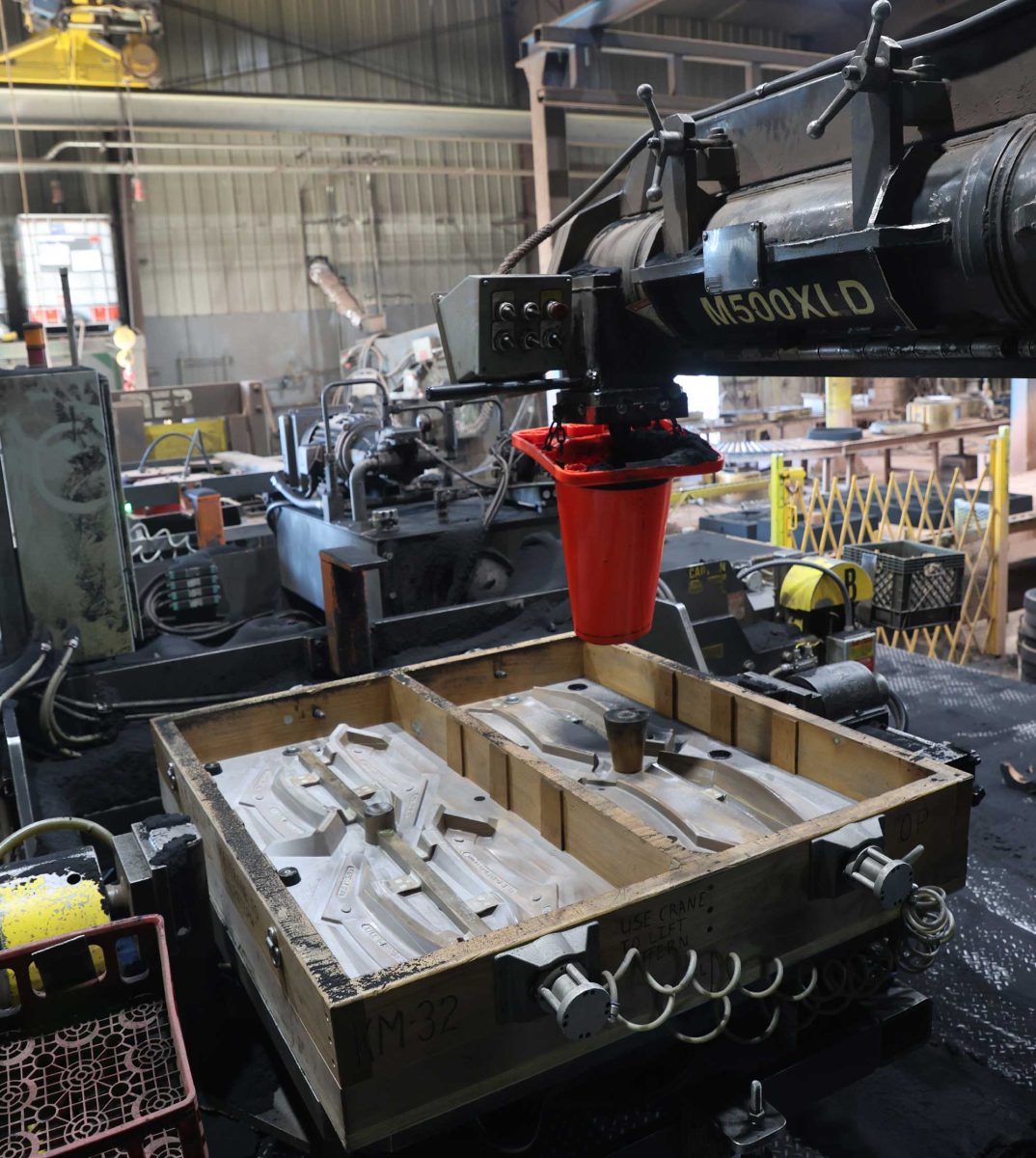
THE YEAR 2023 saw the largest investment into our foundry to date. After years of research and planning, Wear-Tek installed a Palmer Manufacturing FMM (Flip Molding Machine). This highly specialized piece of foundry machinery has allowed us to take a task that was especially labor‑intensive and time‑consuming and turn it into a streamlined, repeatable, and far more efficient process. The result is improved consistency, increased throughput, and the ability to take on more complex projects with confidence.
Greensand Molding
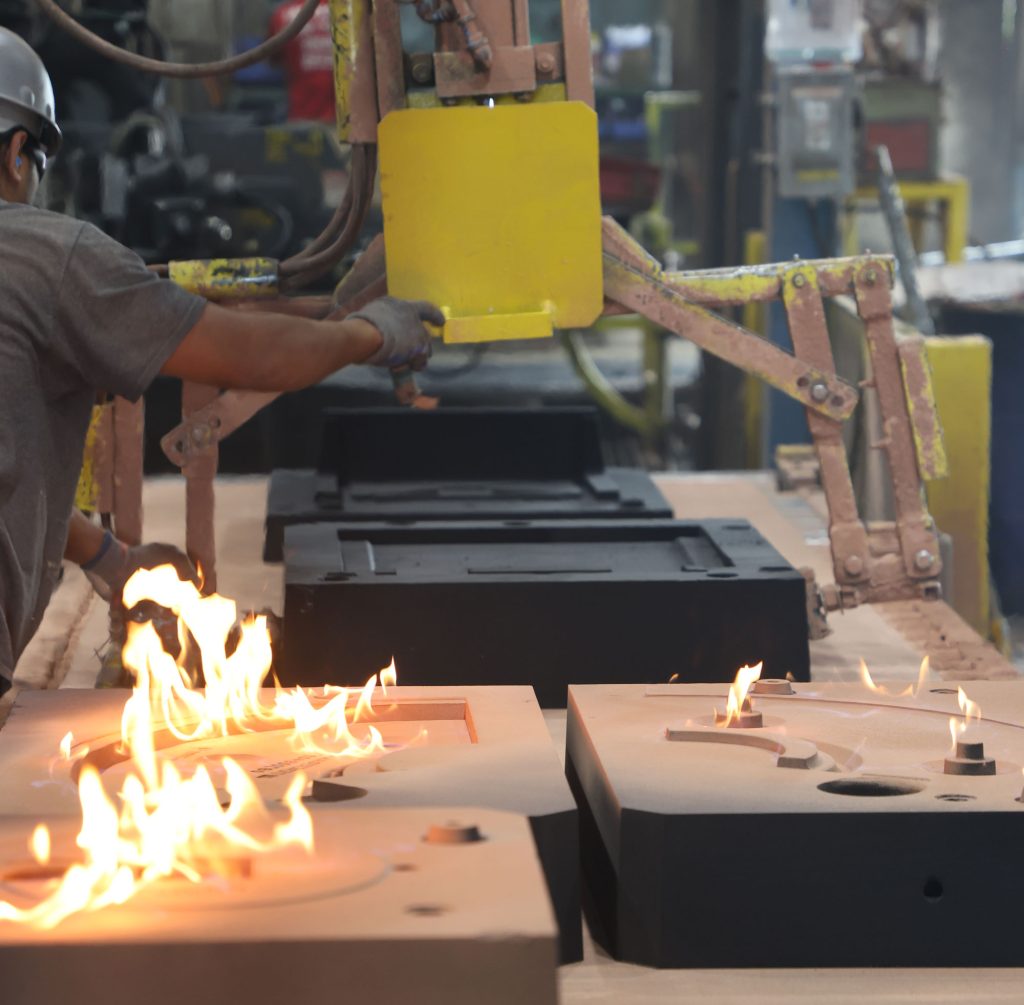
A GREENSAND MOLDING machine can be a very efficient tool in any foundry. Designed around relatively small castings with high production runs. Wear-Tek invested in our 20×24 match plate machine in 2014 to replace an aging and smaller machine. Since then, we have continued to update this machine as well as the many auxiliary components needed to make it a vital part or our foundry.
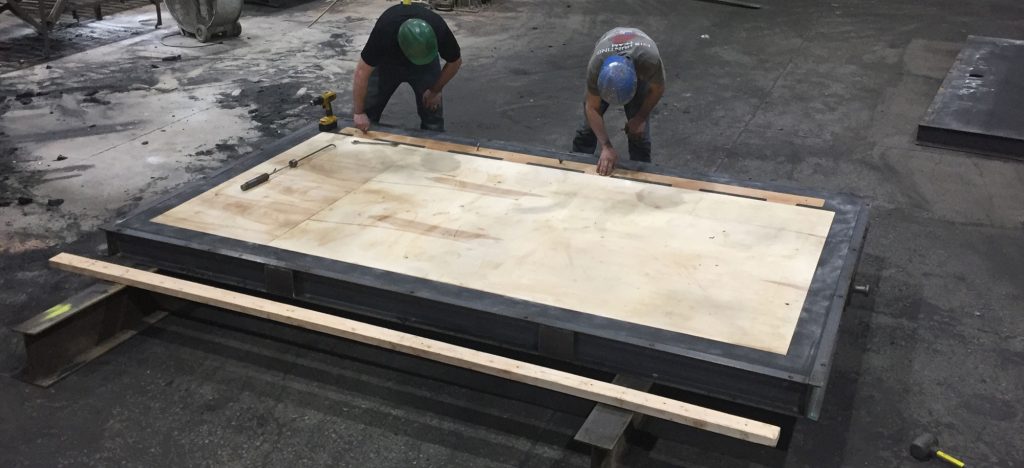
Manual No-Bake
WHILE WE GO to great lengths to use our FMM or Greensand line to produce our molds there are times when the casting is just too large to fit. For these instances we have a manual no-bake line that removes all the size limitations of a fixed machine.
Melting/Pouring
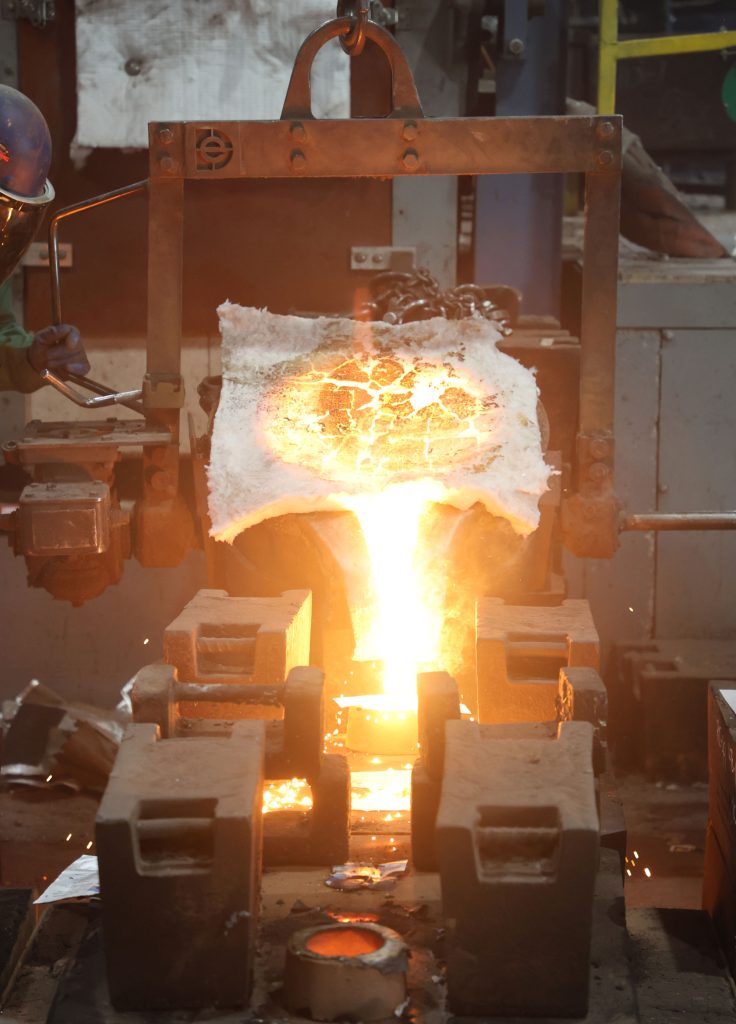
MELTING AND POURING liquid metal is perhaps one of the most interesting parts of a foundry. The ability to take a hard, solid material and by putting it in a specialty container and applying a high frequency current that turns metal into a pourable liquid is a technique that greatly added to mankind’s ability to build. As in other parts of the foundry, we have invested heavily to increase our ability to melt metal safely and efficiently. Our current arrangement is six induction melting pots with 4 power supplies.
Finish Grinding
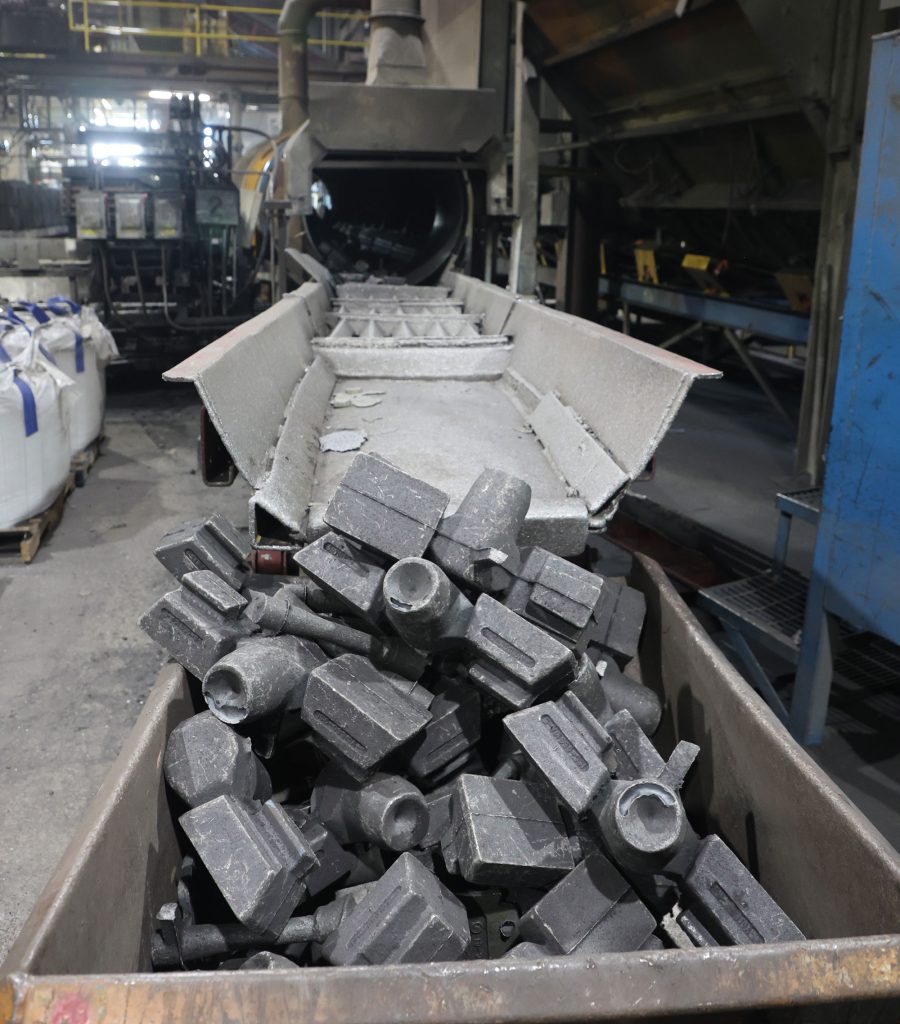
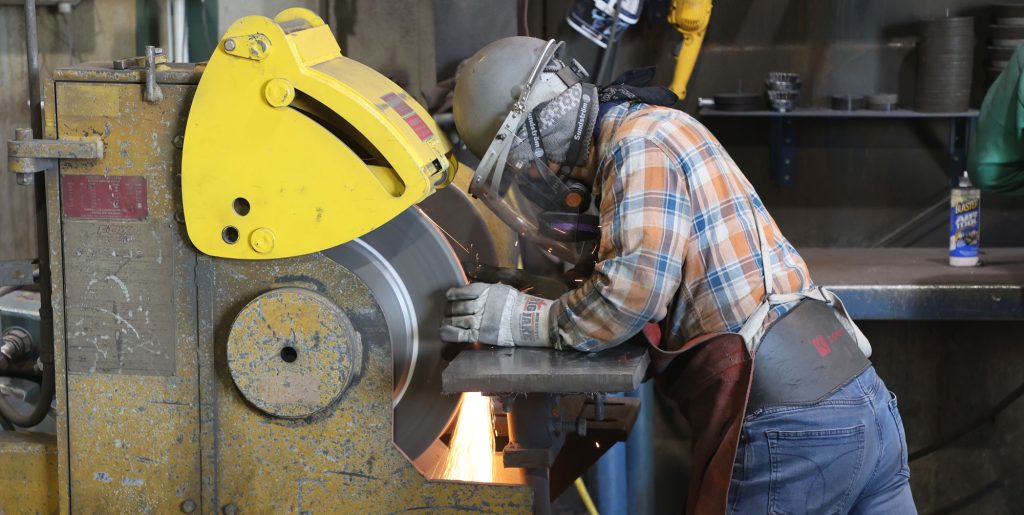
CASTINGS TAKE different paths through the foundry process, however, every casting will eventually be finish ground to remove parting line flash, riser, and gating contacts. This step also affords the time to use check tools where needed to ensure a proper fit at the customer’s site.
THE CASTING process involves many more steps than can ever be listed here. Specialized software is used throughout the facility to track and record nearly every step. This helps us to make decisions along that way to improve efficiency and understand costs.